
Short introduction to the Pavilion of Time by Aknur Zhussip & Zarina Belousova;
Sound bath by Ricarda Silva Henao.
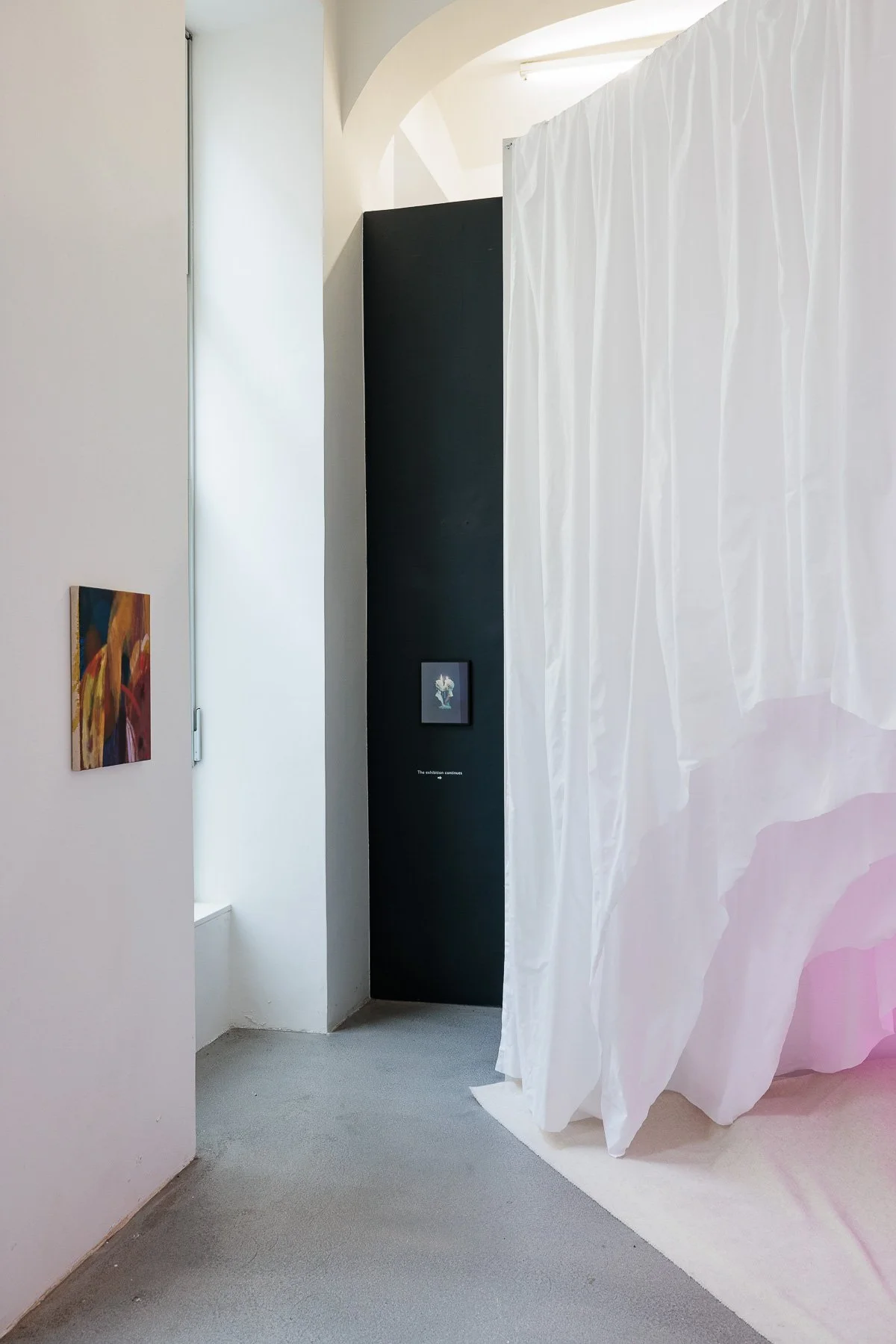
Pavilion of Time
Built by Zarina Belousova & Aknur Zhussip in collaboration with Motsa and Steven Mark Kübler, the Pavilion of Time sits at the heart of Active Rest. This cave-like, textile architectural form invites visitors to enter, lie down, and remain. Inside, light slowly cycles through shades of white, yellow, and pink - colours associated with warmth, care, and restoration. The light sequence unfolds slowly, deliberately extended to stretch the visitor’s perception of duration. Time ceases to rush.
The pavilion was designed considering the existing architectural context and extending it with textile. Different layers of fabric were cut in organic shape to reference archaic form and softening the rigidity of the surrounding structure. The results are two spaces - one within and one revealing the rhythm of time architecturally.
Within the Pavilion of Time, time is no longer something external. The visitor is not passing through time, but remaining within it. A shift from spending time to taking time. The pavilion proposes an experience away from urgency and toward duration - a way of being with time that aligns more closely with natural rhythms such as breath, tides, or seasons. Stillness here is not passive. It requires an active decision to stay.
The program is part of the exhibition Active Rest: An Exploration of Time, 20 February – 4 April 2026.
Zarina Belousova is an architect working at the intersection of space, material, and atmosphere. Educated at the University of Applied Arts Vienna under Kazuyo Sejima, she develops a sensitive and intuitive approach where form follows feeling and beauty becomes an argument. Her international experience with studios and institutions including Ricardo Bofill Taller de Arquitectura, Studio Olafur Eliasson, and IAAC Barcelona shaped a practice grounded in conceptual clarity, material research, and spatial experimentation, with a strong focus on how space influences perception, emotion, and the bodily experience.
Aknur Zhussip, originally from Kazakhstan, is a Vienna-based architect and founder of design studio nōur. Her work is informed by a nomadic cultural background rooted in a close relationship with nature and shaped through architectural studies at the University of Technology Vienna. She approaches spatial practice as inherently interdisciplinary, drawing from art, film, psychology, and neuroscience to explore how environments influence perception and emotional experience. Her projects investigate poetic and contemplative spatial conditions, often seeking to introduce qualities of calm, reflection, and natural presence into constructed environments. Her work has been presented internationally, including at the Seoul Biennale of Architecture and Urbanism.
MOTSA (Valerio Dittrich) is a producer and sound artist whose work is rooted in electronic music, sound design, and narrative composition. Influenced early on by jungle and drum & bass culture, as well as classical piano training, he developed a distinctive sound combining breakbeat structures with organic and soulful elements. His debut releases received international attention, including collaborations with Southern Fried Records and widespread radio support. MOTSA’s practice extends beyond music into audiovisual storytelling, incorporating environmental recordings and moving image to create immersive sonic environments.
Steven Mark Kübler is a German new media artist and interaction designer with a background in architecture, which informs his strong spatial awareness. His practice focuses primarily on light as a material, exploring how digital and generative lighting systems can transform the perception and atmosphere of physical environments. Working across interactive installations and real-time visuals, Kübler draws inspiration from natural phenomena such as fluid dynamics, gravity, and landscapes, translating these forces into time-based compositions that blur the boundaries between digital and physical space.
Ricarda Silva Henao is a psychologist and experienced sound practitioner who creates immersive, calming experiences through sound, using instruments such as crystal singing bowls, gongs and chimes. With a warm and intuitive presence, she guides participants into deep relaxation and mental clarity. Her sessions are designed to help slow down, release tension and reconnect with the body.