
The Morning Desk
Essays, conversations and field notes from the bureau — on the artists, exhibitions and ideas we keep returning to.
Opening the desk…
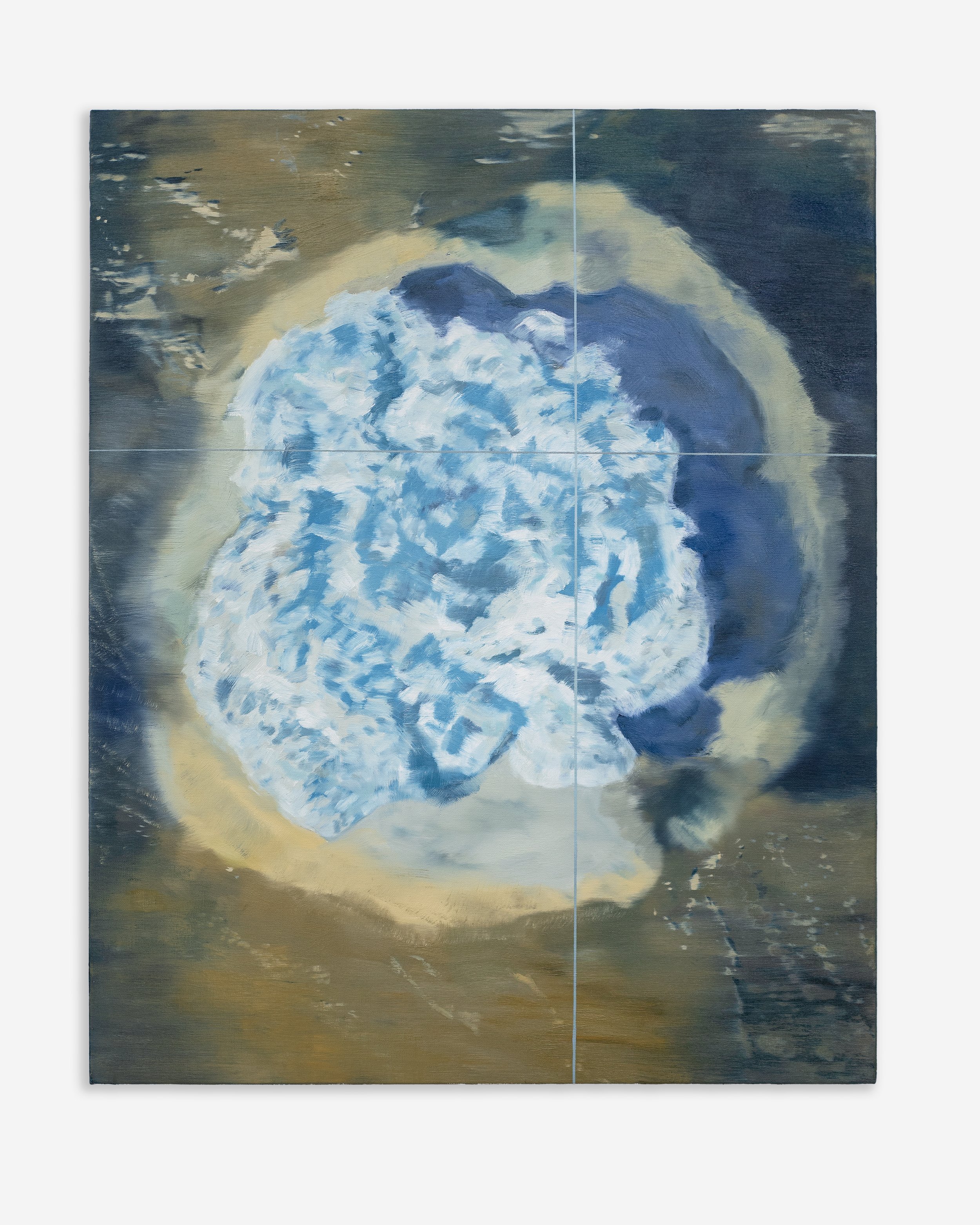
Constellations
Almost every visitor’s first impression of the Signal series is of constellations of stars, probably because of the intuitive intrigue of celestial patterns, probably because of the call of ad astra per aspera that runs through histories—whether via popular culture references like Star Trek or the many institutions that uphold the spirit of striving toward the stars through hardship. In Tan Mu’s Signal paintings, the constellation points away from subject or telos toward a telecommunication system, a critical infrastructure with greater significance than is often assumed: the submarine cables. As of 2025 the network comprises 597 cable systems and 1712 landings in the latest cable map produced by TeleGeography. It is by no means an even system. One easily traces clusters and geometries that mirror geographical surfaces and socioeconomic activities. The cables and landings in Signal 04 (Norway, 2025), for example, exude a commanding glow with a dash of airiness in the upper right, conveying the orderliness and austerity of magnificent coastlines. Signal 06 (Caribbean Sea, 2025), in comparison, is flamboyant and unapologetically convoluted, reflecting the dense archipelago. More than mapping the negative space of inhabited land, the paintings portray the evolving co-authorship of geography, economy, politics, and technology. In oil and acrylic, the thick yellow dots and pale lines create a luminous image that some read as collage or even electrically lit installation.
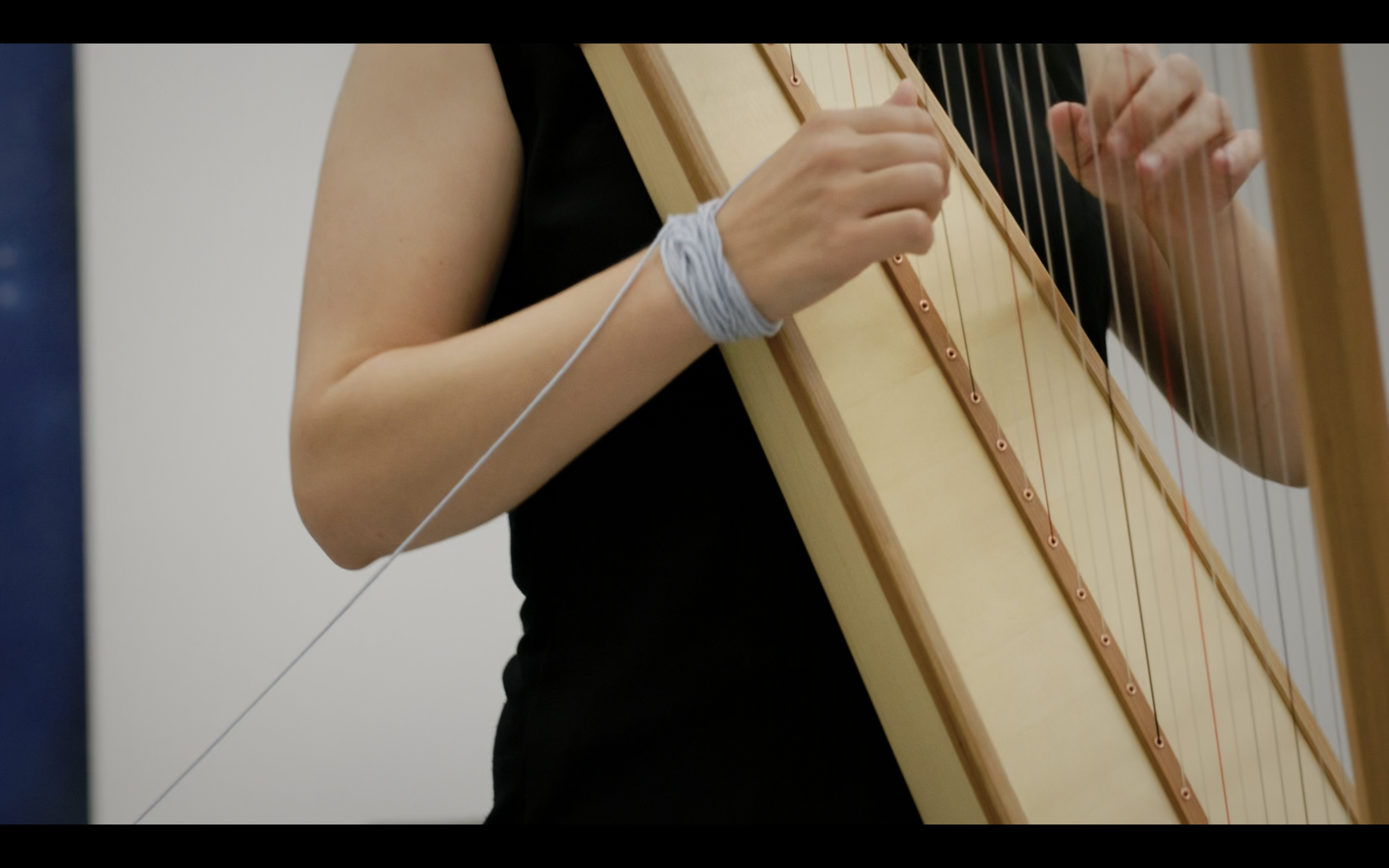
Everything on the Line
Dipping into a sea of stars
A network of connections
fragile, human
The sound of a string
Vibrating in infinity
everything on the line
Imagine the world connected through a taut string that could rip at any moment. A fragile yet beautiful nexus creating tension between the sky, the earth, and us as human beings. The strings of technology come to life on the strings of art, an invisible line converting the artworks into music and vice versa.
The performance Everything on the Line was conceived to convey Tan Mu’s art through music. It was rooted in the belief that music can act as a catalyst—connecting artwork and audience, emotion and intellect. For me, connection was the central concept of the exhibition.
The first time I encountered the Signal series, I felt magnetically drawn to the canvas. Some elements became clear only through explanation; others resonated instantly. I began reflecting on how to translate that multi-layered depth into sound—how to make the art's inherent connections tangible to an audience. Because for me, music in an exhibition like this only makes sense when it serves as a bridge - between the artwork’s inner logic, the presence of the listener, and the countless connections they themselves carry into the space.
The question was: how?
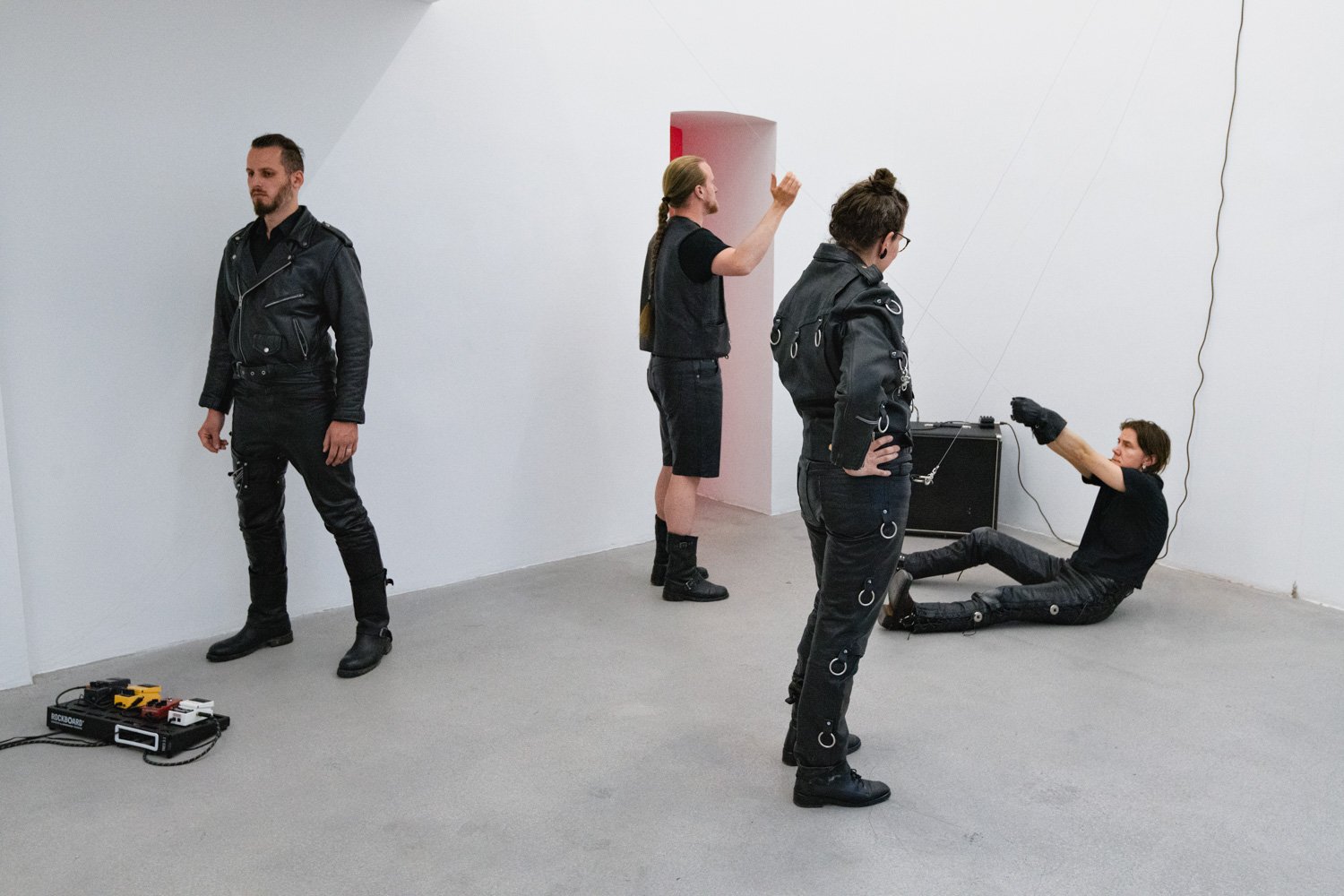
(Still) Tuning and a midsummer night’s strings
Elisabeth left us the strings from her June performance, Tuning. For several days, each time I passed the strings casually hanging beneath the balcony or next to the staircase, it felt as if the wall behind me stirred and the sound lingered. Then one day, when a gust blew the front door shut, the blonde horsehair of Carapacewhispered a complaint, and the gallery felt suddenly so quiet that the tension in this fluffy sculpture screamed for the strings to be activated again. Upstairs, the woven silver sculptures remain a soothing presence—for both humans and the architecture—as they always are.